
A Smart Girl’s Guide to Planning for a Flood
If you live in life on the road, whether it’s the van life, the car life, or the camp life, always be prepared, especially if you are traveling in a flood-prone area
We lived for many years in an area that typically sees tropical storms and an occasional weather pattern from hurricanes. Flooding, including river flooding, occurs rather frequently throughout the summer. If that still doesn’t ring a bell, think about the ill country flood that happened last summer and killed all of those young kids.
Thanks to the Super El Niño in our nation, there appear to be a lot of unknowns right now in the weather.
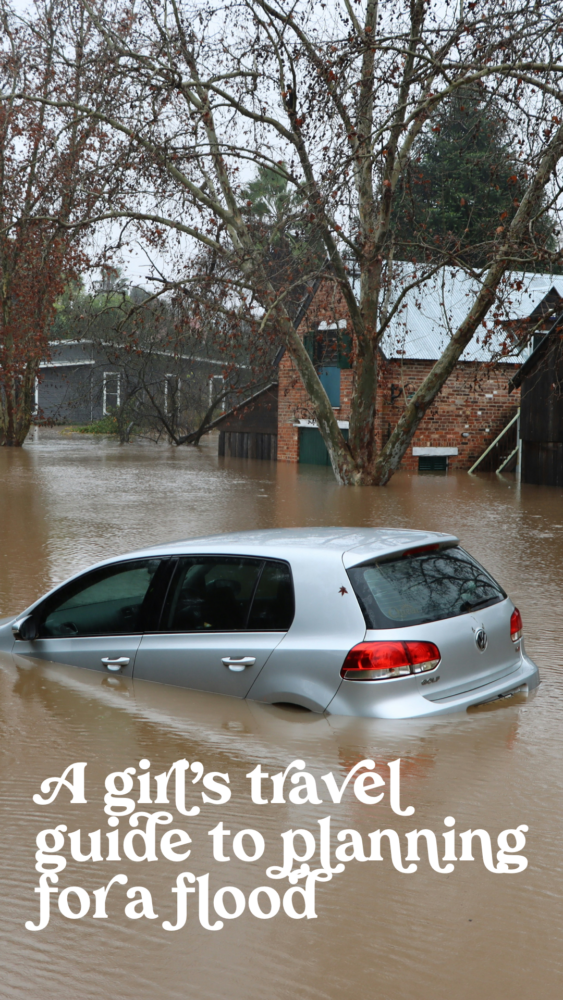
River flooding frequently occurs rapidly, and without a lot of warning. if you choose to camp close to a river, stay close to your phone and watch for any weather.
This app, Watch Duty, focuses on fire and flood warnings and can provide you with up-to-date information on the emergency responses currently happening. it might be better than a radio.
In order to survive any disaster well, there are several things that you can easily have on hand to be ready. If you gather things together ahead of time, then when you do find yourself in an emergency, you will be prepared.
Get Smart About Emergency Flood Preparedness
Emergencies never ask our permission to happen, so we need to plan ahead and prepare for disasters, even if they may not happen. Sometimes we can wait things out, and other times, we must leave.
Take steps for flood preparedness
While there may not even be a drop of water on the horizon, you still need to be ready in case disaster strikes.
If you have lived in a flood-prone area, you know that being ready ahead of time is most of the battle. Flash flooding can occur if you are on the road or at a campsite. Further, water could quickly surround you if you live near a creek that floods during extreme rain.
If you must drive, don’t go through deep ditches, especially when there is water. Nor should you drive through creeks that are overflowing. Either of these could cause you or your family to drown. There is a reason they say, “Turn around, don’t drown!”
You can also prepare ahead with these safety tips from Ready.gov.
Make sure you have access to the weather.
Whether you have a smartphone with a weather app (NOAA does have one, which is really helpful), you may not be prepared if you lose electricity and cannot charge your phone. Solar-powered chargers can help, or car adapters that let you plug in devices.
Worse, you may not have any phone service if a flood wipes out the local phone towers. Having access to a battery-operated radio is best if there is any risk of losing phone service or electricity.
Get an air compressor
You can buy air compressors at Walmart or on Amazon. Air compressors can be plugged into your cigarette lighter and used to inflate flat tires. While having Fix-a-Flat is still a great idea, it doesn’t always work to fully inflate your flat tire (ask me how I know).
Some of the fancier compressors come with USB plugs as well. Some also have jumper cables attached.
Keep an emergency kit in the car
Make sure you have things like Fix-A-Flat and tools in the trunk. Keep a roll of paper towels, a jug of water, and a flashlight.
Add anything else you can think of, like rope, jumper cables, or extra motor oil and a funnel. If it gets cold where you live, antifreeze, blankets, an emergency lighter, or snow chains may help.
Prepare your kids
Help your kids help you get ready for emergencies.
If you are in the middle of a crisis, talk straight without as much fear as possible, and give them jobs. Turn on videos or make a safe place for them to play while you carry out your responsibilities.
Give them color pages from the Ready.gov website (see the kids section). I also created this hurricane unit for my own son, which you can do together later, when the questions start.
Secure your animals
Typically, if your household pets are with you, they will find shelter and safety within your home and your family. However, if you live in a flood plain or near one, securing your livestock, especially, can become an important task.
Herds of animals have been wiped out because they were trapped by water and no one could rescue them. Getting them to higher ground is important.
In one really serious flood in our area, my goat got surrounded by a field of saturated mud. I had to crawl out in mud that literally went up to my hips to get him to safer ground (a first). When it rained again, I moved him to his obvious happy place (below).
More Smart Girl Tips For Emergency Preparedness
I learned how to be prepared for an emergency through my homemaking over the years. My pantry remains stocked (even the animals have food) all the time. I didn’t grow up this way, but since I live in a place where emergency preparedness is important, I learned.
I keep plenty of batteries. My utility room stores plenty of candles and click lighters. Plus, I always have natural remedies on hand for any illness or minor boo-boos.
If you are planning for hurricane season, flash floods, or winter storms, there are some handy items to keep your family provided for in case of a loss of electricity, gas, or water for extended periods of time. Emergency preparedness really is important.
Canned goods
While you may have access to an outdoor grill or a wood-burning stove in your home, canned goods are great if the electricity goes out. So are jars of peanut or nut butter and jelly if you like.
Even if you don’t eat canned food regularly, stocking away a few cans for emergencies will pay off. But, uh, keep the junk food to a minimum; it will go fast and not sustain anyone.
Frozen bread or tortillas
In Texas, we like flour tortillas. But whether it is a few packages of tortillas or loaves of bread, stick them in the freezer to pull out in a pinch.
If your electricity goes out for a day or more, tortillas or bread are easy to defrost and good nutrition for sandwiches or wraps.
Outdoor grill
Keep your outdoor grill in good working condition, or make a fire pit for an open campfire (check your zoning laws).
Having a cooking source when your meat is defrosting during summer disasters allows you to cook a meal.
Propane or gas heaters
While this one is probably obvious to people in cold climates, it bears saying that smart girls should have extra gas or propane before deep winter hits.
This way, when a deep freeze occurs, you have enough to get through a winter storm.
Firewood
During the Winter Storm of 2021, I had plenty of firewood, and I was so glad. While we did not lose electricity in our area, I worked to conserve what we had with fires in our fireplace. Firewood went a long way to keep our home warm during the deep freeze.
An ice chest
We have a couple of ice chests, and probably you do too! Gather them up, or clean them out ahead of time so that you have a place to store food with ice if your electricity goes out.
Ice packs
Chances are, if your electricity goes out, you cannot just run to the store for ice in the middle of an emergency. Make sure you have several ice packs on hand and frozen if you know your electricity will likely go out.
Or, use the snow and ice all around you in the middle of a snow or ice storm! You can put the ice in a Ziploc to keep it separated from food. This way, you have cold ice to keep your food chilled.
Batteries
Some are better about this than others, but during our flood, I realized I was out of D batteries! We managed, but even if it means keeping a stock from the Dollar Tree, a stockpile of batteries always goes a long way.
Know what sizes of batteries you need before there is a run on them at the store!
Rope
Keep rope for your livestock or to help someone get their car unstuck. You might even need it to drag something. Or, you could use rope to make a clothesline for wet items. You seriously never know.
Candles
I don’t know about you, but I love candles! I buy several from Dollar Tree at a time, just to keep on hand (and those handy lighters too).
You may not want to use your decorative candles for an emergency, but you can certainly have several on hand for when the lights go out.
Insect repellent
This probably goes without saying, but in a flood crisis, the mosquitoes just breed. Whether it is your natural insect repellent or store-bought, keep plenty of it on hand.
I also use essential oils for mosquito repellent on the kids especially.
Generator
This may be necessary if you lose your electricity and need to refrigerate food or medications.
My son used to have injections that needed to be refrigerated. But if you need assistance with special medications, you can also contact the local Red Cross for storage assistance.
Water and other drinks
Flavored drink mixes, or even stevia packets for those who won’t drink water very well, are helpful. If you are without electricity, hydration is really important!
Even bottles of water help everyone to drink the water they need. Making sure you have water jugs or Igloos of water stored for emergencies always helps.
You can also buy tablets or filters to clean impure water for drinking.
A clothesline
A clothesline isn’t just for doing the laundry, although you may have to wash your clothes too. But draping wet clothes, blankets, and other coverings helps air-dry items after the storm is gone, or in between storms, as in our case. Prepare to be off-grid for emergency preparedness.
A shovel
A shovel can go a long way in wet weather. It can help you dig if you need to. Or, it can kill a snake driven out of its home. Either way, a shovel is a good thing to have if you live on any size property.
Plywood
Most think of this when you live on the coast with hurricane season; however, if a storm comes along and rips a hole in something, you at least have one sheet of plywood to nail over it. While a tarp may work if there is no more rain or wind, a piece of plywood will do better if it storms again.
Gas
If you live #offgrid, this may be obvious all the time, but if the gas station is around the corner, such as where we live, you may not think about it.
But several years ago, when a hurricane hit the Houston, Texas, area, everyone and their parents, grandparents, cousins, aunties, and uncles all drove up the road to our small town to buy gas.
Guess what we ran out of? It wasn’t storming yet in our location, but many had to leave a large metropolitan area. Getting gas is a big part of emergency preparedness.
Fill your tank up with gas before things really hit hard.
Cash
Having cash on hand may seem like a minor issue in our modern cashless society, but if the electricity goes out for days and you need milk or bread, then, well, you will be flat out of luck.
Plus, as in the Houston example, if everyone is in need (because they aren’t prepared), then the cash machines run out of cash. It does happen.
Large buckets
Many years ago, I was in a town in Georgia, and we had a serious flood and lost our water for two weeks.
The National Guard trucked in water, and as citizens, we had to take our containers while they filled them with water. That was for bathing, eating, and running the toilet. You never know.
Bleach
Bleach is not all that natural, but when you are using buckets of water to run your indoor toilet, you must have bleach to keep things sanitary.
Plus, when the water comes back on, you end up with quite a mess—and unsanitary conditions. I don’t use bleach around my house much, but I do like to keep a jug just in case.
Emergency preparedness is safety
Safety should always come first. During a natural disaster, emergency preparedness goes a long way and helps us keep our families safe.
Sometimes you can wait through a bad weather crisis; other times, it is your only option to get out. Either way, prepare ahead of time for a crisis and be as prepared as you can.


coffeetravelinggrandma
Lover of coffee, traveler, dog lover and bursting with plenty of opinions.❤️👵🏻☕️


You May Also Like

Planning Your Travel Route: A Road Traveler’s Guide to Campsites, Scenic Stops, and Offline Maps
The Ultimate Guide to Summer Driving Emergencies
