Car Camping on a Budget
I remember walking into a convenience store in the morning, as I had done several times before. The sun promised another nice weather day; I was camping at a campsite I found so off the beaten path that most people had no idea it existed.
One morning I awoke as usual, walking my dogs on the adjoining trail when I noticed what appeared to be a fox, but then noticed it was far too large. When it peeked into a stump in the middle of the field, I knew then that I was watching a wolf, and a white one at that.
It was unlike anything I had ever witnessed, and I felt so blessed to be so out in nature simply camping out of my car. Who cares if I did not have a camper? No expensive price tag can be placed on such an event as that.
I walked into the store one morning shortly after, when the woman who worked there rather regularly stated how expensive it was to travel. So I quickly shared that traveling really does not have to be expensive.
It finally dawned on me that despite the fact that life’s circumstances had forced me into the position I was in, thousands of miles away from home, it was a gift. I will probably rarely be in this position again, and I began to look carefully around me, taking as many photos as I could.
So, yes, it is possible to car camp on a budget.
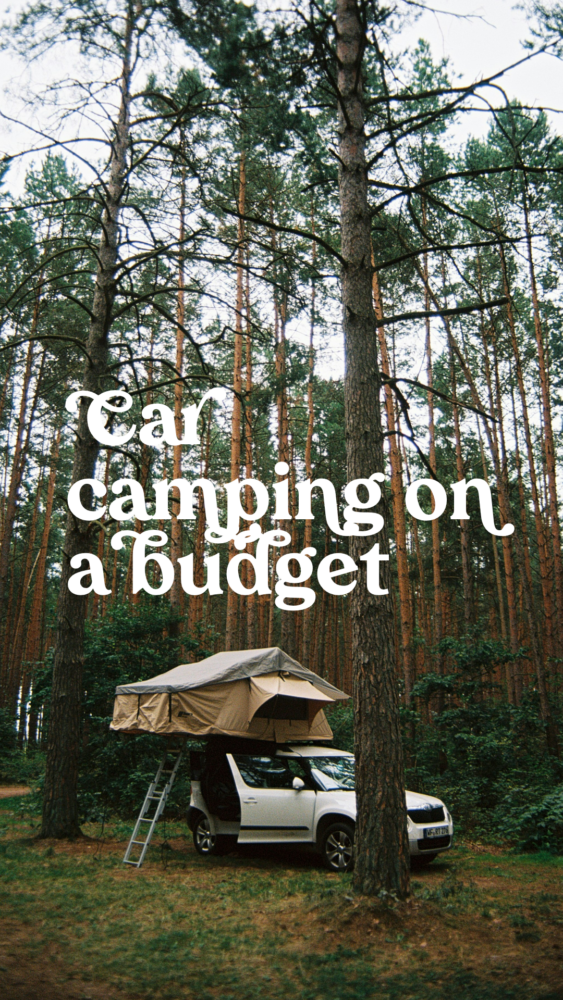
There is something wonderfully freeing about realizing you don’t need a fancy RV, an expensive campground, or a huge travel budget to get out and see the country.
Sometimes, all you really need is a reliable car, a place to sleep, a little planning, and a willingness to embrace a simpler way of traveling.
Basic Necessities for Car Camping
And when I say basic necessities, I mean you may find some temporary substitutes for these, but it helps to at least work towards these items for the most comfort in a small space.
- A comfortable sleeping pad or mattress
- Sleeping bag or blankets
- Pillows
- Window coverings for privacy
- A small cooler
- Water containers
- A camping stove and propane
- Basic cookware
- A flashlight or headlamp
- A power bank with a solar panel (not completely necessary, but helps)
- A few storage containers
Trust me, you will find other tools and gadgets that you feel like you need in your situation, but preparing ahead of time with these basic items provides a solid foundation. If money is tight, check out the outdoor aisle in your local thrift store.
And remember, the key here is to stay within your personal budget.
Learn to Find Free Sleeping Accommodations
The first thing you learn while traveling on the road is that sleeping in your car may be convenient, but it does come with some risks and rules in different places.
You can sleep in your car legally at Rest Areas along the highways. Every state has different regulations, so be aware of what they are. Some locations are fussy about visitors not “camping.” What that usually means is pitching a tent, or launching some level of group encampments. However, others will not allow travelers to park their RVs overnight, as that becomes camping to some.
However, rest areas provide rest rooms, water, and a relatively safe place to park.
Depending on where you travel, you may find free or very inexpensive camping on public lands, including some areas managed by the Bureau of Land Management and U.S. Forest Service. Dispersed camping can be especially helpful for travelers on a tight budget, which is free camping on a first come first serve basis in already used, out-of-the-way campgrounds. Check apps like Campendium and Dispersed Camping, as well as the Forest Service websites for specific locations where you can do this.
This saves you money instead of paying for a developed campground with hookups, picnic tables, showers, and other amenities. Adding a portable toilet and a shower/bathroom setup in your camp helps make this a nice choice to saving money.
While many other people launch into roaming parking spots where they pull off the side of the road and park, it is not something many locations accept.
Plan Your Groceries
Eating restaurant meals every day is one of the fastest ways to destroy a travel budget. You can spend a fortune, even traveling through every McDonald’s restaurant along the highway—and believe me, it is possible to do!
A good cooler can become one of your most valuable pieces of camping equipment, but the truth is that most of what you pack food-wise should be mostly nonperishable, with smaller amounts of produce, yogurt, and items you know you will cook within a day.
Buy groceries in larger towns or at discount markets where prices are generally better rather than waiting until you’re hungry in a tourist area, where prices are high.
Some inexpensive road-trip foods include:
- Sandwich ingredients
- Hard-boiled eggs
- Cheese
- Fruit
- Vegetables
- Yogurt
- Oatmeal
- Tortillas
- Peanut butter
- Canned tuna or chicken
- Crackers
- Granola
- Trail mix
- Instant rice
- Pasta
- Soup
- Coffee (instant and ground) or tea
- Condiments that keep well
- Any seasonings, sweeteners, or non-dairy creamers for your coffee or tea
Carry Your Own Water
Water is another small expense that becomes surprisingly large when you’re traveling continuously. The best thing to make sure that you have is at least one 5-gallon jug. You can purchase one at Walmart for about $15.
Keep a water bottle for each person to refill and use, as well as a water bowl for any pets you bring along. You also need to consider how much water you need for bathing, hygiene, cooking, and don’t forget making coffee.
The best places to find water are the Primo water machines in Walmart, Safeway, or other grocery stores along your route for about $3 per 5 gallons.. Also, if you utilize the Rest Areas along the highways, many of them have a spigot to fill water jugs for free, which, of course, saves you a lot of money if you need a lot of water.
Just remember that water availability varies considerably in remote areas. Don’t assume your next refill point will be convenient. I try to also make sure I carry extra water when traveling at all times.
Make Your Own Meals
And of course, groceries and water lead right into making as many of your own meals as possible.
Making sure that you have enough propane for your camp stove when you need or can cook, but also make sure that when the weather is bad, or there is a burn ban, you pack plenty of throw-together meals to eat on the go or have a picnic.
One-pot meals are especially useful when you’re living out of a car because they require fewer dishes and less cleanup.
Some ideas might be:
Breakfast: oatmeal, cereal, eggs, toast, or breakfast burritos.
Lunch: sandwiches, wraps, leftovers, fruit, or soup.
Dinner: pasta, rice and beans, chili, canned soup, or a simple skillet meal.
Snacks: Cookies, chips, carrots, celery, apples, oranges, crackers, grapes, meat sticks, etc.
Use Public Amenities When Available
One challenge of car camping is dealing with basic needs like showers, bathrooms, laundry, and charging devices.
Public recreation areas, libraries, laundromats, gyms, and other community facilities can sometimes provide inexpensive solutions. Truck stops like Love’s or Pilot not only sell discount fuel for regular customers, but some of the locations have things like mini laundromats, showers, free and paid WIFI, hot water for your thermos, and some of them also have parking for one or more hours if you need a break.
In all honesty, Love’s is the best traveling company, even for car drivers, and Pilot tends to be a bit fussy about parking and will kick you out if they think you overstayed.
A gym membership may even make sense for someone traveling long-term if it provides access to showers and locations along your route. Just check the memberships; some of the less expensive ones require you to choose a “home” location, but you can travel more if you purchase a more expensive membership.
Libraries are particularly valuable to travelers and will allow you free WiFi and a place to charge and use devices, especially laptops.
Plan Your Road Trips to Save Money
Gasoline will probably be one of your largest expenses when you’re traveling by car. Sometimes, spending a lot of time on the go, traveling to unique and different places can be enjoyable.
But other times, you may need to find a place to camp for a few days to regroup and save a bit of gas money. Traveling on the road with all that it entails can be a bit draining, so downtime, with plenty of rest, helps you keep up your momentum.
Plan your route before heading into an area rather than constantly backtracking. If there are several places you want to see, group them together geographically.
Sometimes a slightly slower route through public lands can provide free camping and beautiful scenery while avoiding expensive tourist destinations.
Enjoy Free Attractions
You don’t have to spend $50 every time you want something fun to do. There may be times you wish that you could, but there are plenty of amazing things to see and do for only the cost of gas and food.
Some of the best experiences on the road cost absolutely nothing.
Look for:
- Hiking trails
- Scenic overlooks
- Beaches
- Lakes
- Forests
- Wildlife viewing areas
- Historic sites
- Public parks
- Scenic drives
- Waterfalls
- Small-town downtowns
- Farmers markets
- Local festivals
- Free museums or community events
Check the state and local parks for fees, especially camping fees. National parks and Bureau of Land Mangement lands allow you to camp for free in what is termed dispersed camping.
Don’t Chase Every Tourist Attraction
It’s easy to fall into the trap of thinking you have to see everything and pay a price for it. As stated above, finding free ways to see the local culture or landscape, all you have to do is drive, stop, and maybe take a photo.
National and state parks do offer free days if you want to visit something that costs money. Or, even better, you can purchase national park passes, which waive the parking fees in charged parks. You might also want to buy annual park passes for states where you spend a lot of time.
If you’re traveling on a budget, choose the experiences that genuinely interest you. Maybe it means photographing a spectacular sunset rather than paying for an attraction.
Travel doesn’t have to be expensive to be meaningful.
Give Yourself a Daily Spending Limit
One of the easiest ways to lose control of a travel budget is simply not knowing where the money is going. Take time each morning to plan out and regroup where your money needs to go and what your plans are.
Life happens, even when you are on the road, and your needs for money change on a daily basis. While you may have a budget, you may need to reorganize it on a daily or weekly basis to get back on track and stay on track.
Build and Keep a Small Emergency Fund
Life happens around you, and you need to spend money on unexpected things.
Cars break down, tires go flat, or weather changes.
Plans fall apart because of illness or family crisis, which occur whether or not you are at home or near your family.
An unexpected repair can turn a wonderful road trip into a financial disaster if you have no backup money.
Remember Why You’re Doing This
Some days, the reason why we ventured on this journey in the first place cracks. We lose perspective, and our mental health may suffer.
Maybe your to-do list piled up while you were traveling and having fun. Or, you need to spend a few days focusing on work and caring for your car instead of traveling down the road.
Maybe a mental health day means camping free for four nights and paying for a campground on the fifth night so you can shower, do laundry, recharge everything, and enjoy a little comfort.
Maybe it means spending less on accommodations for a few days so that you can spend more on experiences.
Focusing on the why you are traveling down the road in the first place, whether you chose it, or it chose you, and regrouping to get yourself back on track.
The Real “Luxury” of Budget Car Camping
While you might think that car camping is not really a luxury, it kind of is.
It’s having the freedom to wake up somewhere beautiful and realize that you don’t need to worry about the responsibilities of normal life today.
You can make coffee while the sun comes up, take a morning hike, or spend an afternoon exploring a little town. It may even mean working on your own schedule and in the location of your choosing. Finally, you may find a quiet place in the forest and stay another night.
And you can do it without spending a fortune. You don’t need a luxury RV, an unlimited bank account, or a perfectly planned itinerary.
You need a vehicle that gets you there, enough preparation to keep yourself safe, and a willingness to discover what you actually need along the way.
So pack your coffee, check the map, fill the tank, and hit the road.
There is a whole lot of country out there—and you don’t have to be rich to explore it.


coffeetravelinggrandma
Lover of coffee, traveler, dog lover and bursting with plenty of opinions.❤️👵🏻☕️